
NSCHC Recognizes National Social Work Month 2026
Social Workers: Uplift. Defend. Transform.
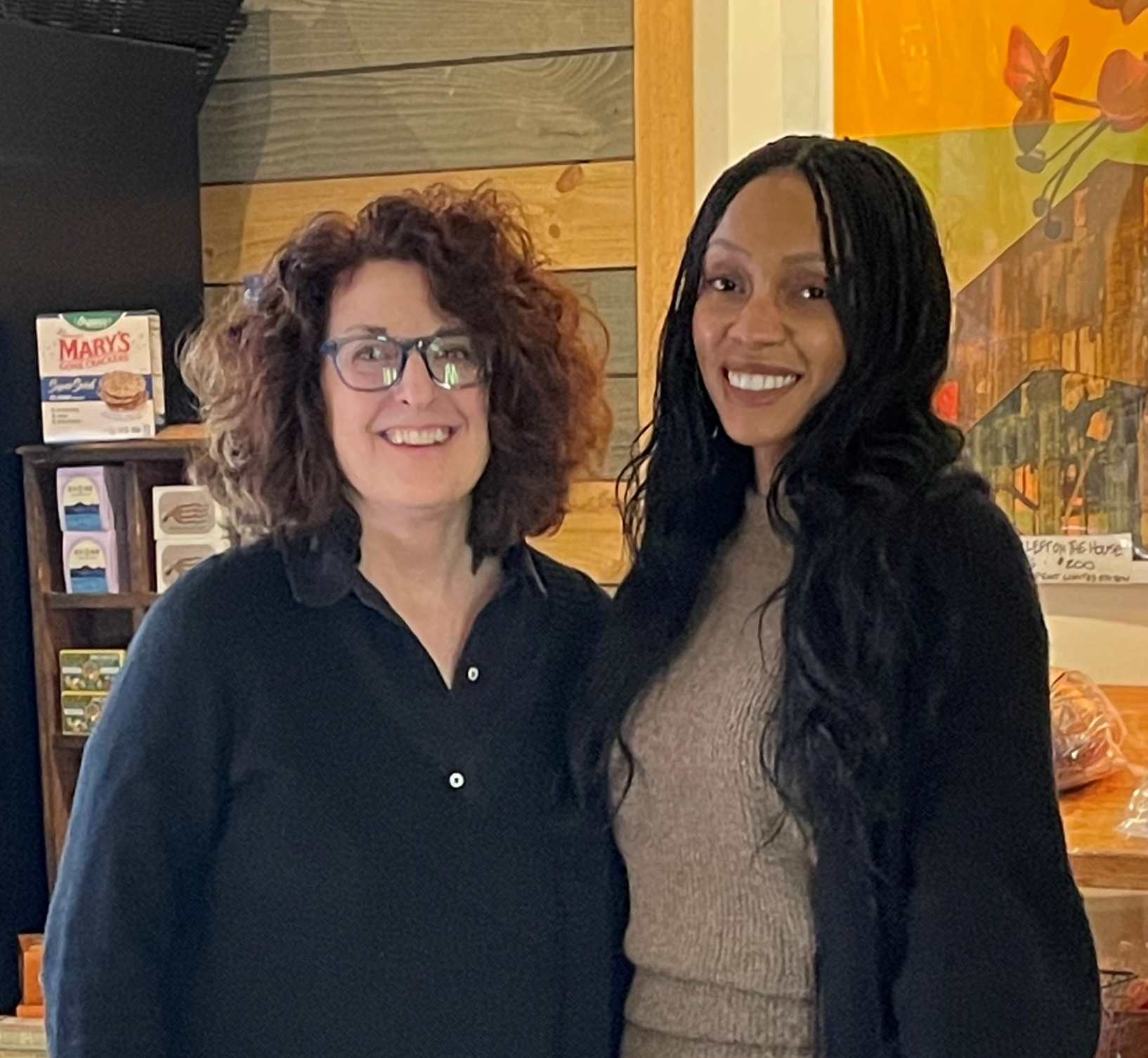
Ann Gilligan, Mayfly Market and Chelcy Beavers, NSCHC Social Worker
March is National Social Work Month, a time to recognize the essential role social workers play in strengthening communities and supporting individuals and families through some of life’s most complex challenges. The 2026 theme— “Social Workers: Uplift. Defend. Transform.”—highlights the profession’s commitment to improving well-being, empowering vulnerable populations, and advocating for more equitable systems of care.
At NSCHC, social work is an integral part of providing whole-person primary health care to underserved individuals on Pittsburgh’s Northside and surrounding neighborhoods. Social workers help bridge the gap between medical care and the real-life circumstances that often affect a patient’s ability to stay healthy.
For many patients, challenges such as transportation barriers, food insecurity, financial hardship, or gaps in insurance coverage can stand in the way of receiving care. By addressing these issues directly, social workers help ensure that patients can access the services they need to maintain their health and well-being.
One of those advocates is NSCHC social worker Chelcey Beavers, whose work focuses on helping patients navigate the healthcare system while supporting their autonomy and dignity. Chelcey brings more than a decade of experience spanning healthcare, public health, and behavioral health, with expertise in care coordination, patient navigation, and community-based support services.
Interview with Chelcey Beavers, NSCHC Social Worker
What inspired you to become a social worker, and what does the profession mean to you personally?

Chelcey Beavers, NSCHC Social Worker
“I began my career as a health coach with a strong desire to bridge lifestyle management with a clinical lens. That experience showed me how important it is for patients to understand their options and feel empowered in their care.
Becoming a social worker allowed me to expand that work by helping patients navigate complex healthcare systems while supporting their autonomy. To me, social work is about educating patients, advocating for their needs, and guiding them toward informed decisions that best support their health and well-being.”
Social work can be emotionally demanding. How do you stay grounded and resilient?
“It’s important for me to recognize my role within the larger healthcare and social services ecosystem. Meaningful change happens when we focus on the areas where we can make a real impact rather than expecting to overhaul the entire system on our own.
Helping even one family navigate a difficult situation is meaningful progress. I often think of the work as building strong roots and nourishing the soil rather than simply scattering seeds. When we focus on creating strong foundations for patients and families, the impact can grow far beyond a single interaction.”
What does a typical day look like for you at NSCHC?
“Patients often come to us managing complex medical conditions alongside significant social challenges. These social determinants of health—such as food insecurity, transportation barriers, financial hardship, or gaps in insurance coverage—often compete with medical needs for priority, both practically and emotionally.
My role is often to help patients navigate these challenges by identifying immediate needs, determining priorities, and building a clear path toward solutions. I work closely with the clinical team to support patients in understanding their healthcare options, reviewing insurance coverage, and selecting plans that align with their individual circumstances.
At NSCHC, we’re fortunate to have a variety of support services available in-house. Sometimes that means providing bus tickets, connecting patients with food boxes or vouchers, or sitting down with someone to help them complete complicated paperwork. These practical supports can make a significant difference in whether a patient can access and maintain their care.”
Can you share an example of how social work helps open doors to care?
“Recently, I supported a patient who had lost their job and was facing significant financial hardship. At the same time, they were managing diabetes and were concerned about how they would afford their medications and ongoing care. Together, we were able to enroll them in a state Medicaid plan and connect them with affordable healthcare resources to ensure they could continue their treatment while their coverage was being established.
Situations like this highlight how social work helps ‘open doors to care.’ By helping patients navigate insurance systems, address financial barriers, and access supportive resources like transportation or food assistance, we make it possible for them to stay engaged in their healthcare. Just as importantly, we help patients feel supported and understood during what can be very stressful circumstances.”
What do you wish more people understood about the role of social workers in healthcare?
“Many of the health challenges patients face are not strictly medical—they are rooted in systemic issues or limited access to resources. Social workers help bridge that gap by identifying barriers that affect a patient’s ability to receive or maintain care.
When social workers are integrated into healthcare teams, it allows providers to better understand the full context of a patient’s situation. This collaboration helps ensure that care plans are realistic, accessible, and responsive to the challenges patients face in their daily lives.”
This year’s theme is “Social Workers: Uplift. Defend. Transform.” What does that message mean to you in your daily work?
“To me, this theme reflects the many ways social workers advocate for patients at both an individual and systemic level. We uplift patients by helping them navigate difficult circumstances and access the resources they need. We defend their right to care by advocating for equitable access to healthcare, especially as policies and coverage requirements continue to change. And we contribute to transforming systems by identifying barriers and working collaboratively to improve how care is delivered.”
The work of social workers like Beavers reflects the mission of NSCHC: motivated by Christian principles to provide compassionate, whole-person primary health care to underserved persons on the Northside and surrounding neighborhoods. By addressing both medical and social needs, social workers help patients overcome barriers and stay engaged in their care—bringing NSCHC’s vision of a healthier, more connected community closer to reality.
Bethany Blackburn, Chief Executive Officer of North Side Christian Health Center, expressed deep gratitude for the role social workers play in advancing the organization’s mission. “Social workers are essential to the compassionate, whole-person care we strive to provide every day at NSCHC,” Blackburn said. “They open doors to care for our patients during some of life’s most challenging moments. Chelcey’s work is a powerful example of how social workers uplift individuals, defend access to care, and help transform lives and communities. We are incredibly grateful for the dedication and heart she brings to our patients and our team.”
